Practical AI engineering. From idea to working system.
An independent AI engineering initiative exploring how generative AI can solve real-world problems through experimentation, practical development and collaboration.

Featured Projects
AI agents, persistent memory, video creation and integrations built around practical workflows.
Maintenance Copilot
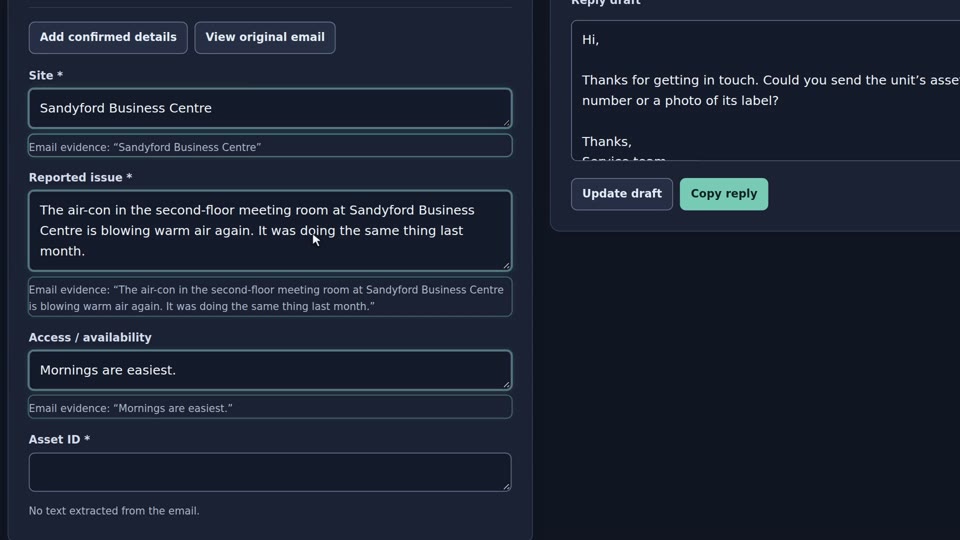
Maintenance Copilot is an AI assistant for maintenance request triage. It turns customer emails into editable job briefs, flags missing site and equipment details, and drafts clarification replies for review before a team handoff.
View Details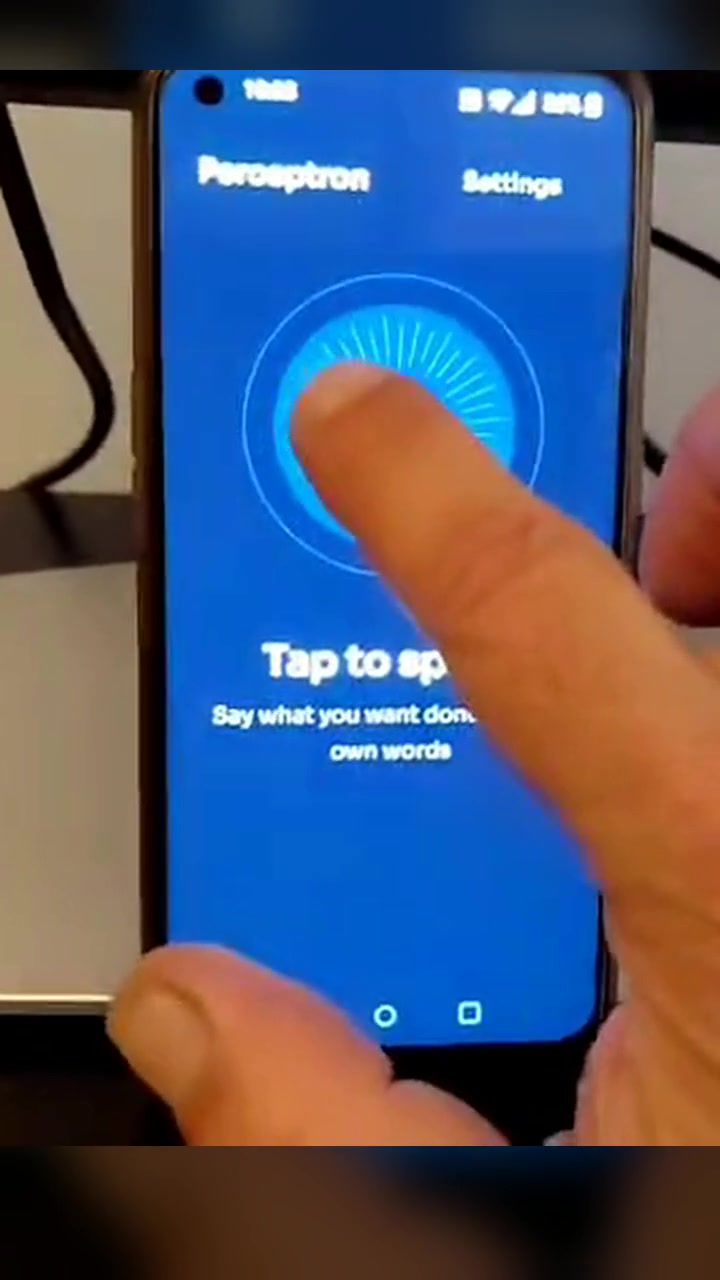
Perceptron Phone
Independent Android prototype. An Android agent that turns a spoken goal into actions in existing apps. It observes the screen, executes an action and checks the result, with checks before consequential actions and before declaring completion.
View Details
Claude Recall
Independent open-source tool. Persistent, project-scoped memory for coding agents that carries decisions and corrections across sessions. Stored rules can be inspected, corrected and retired as a project changes.
View Details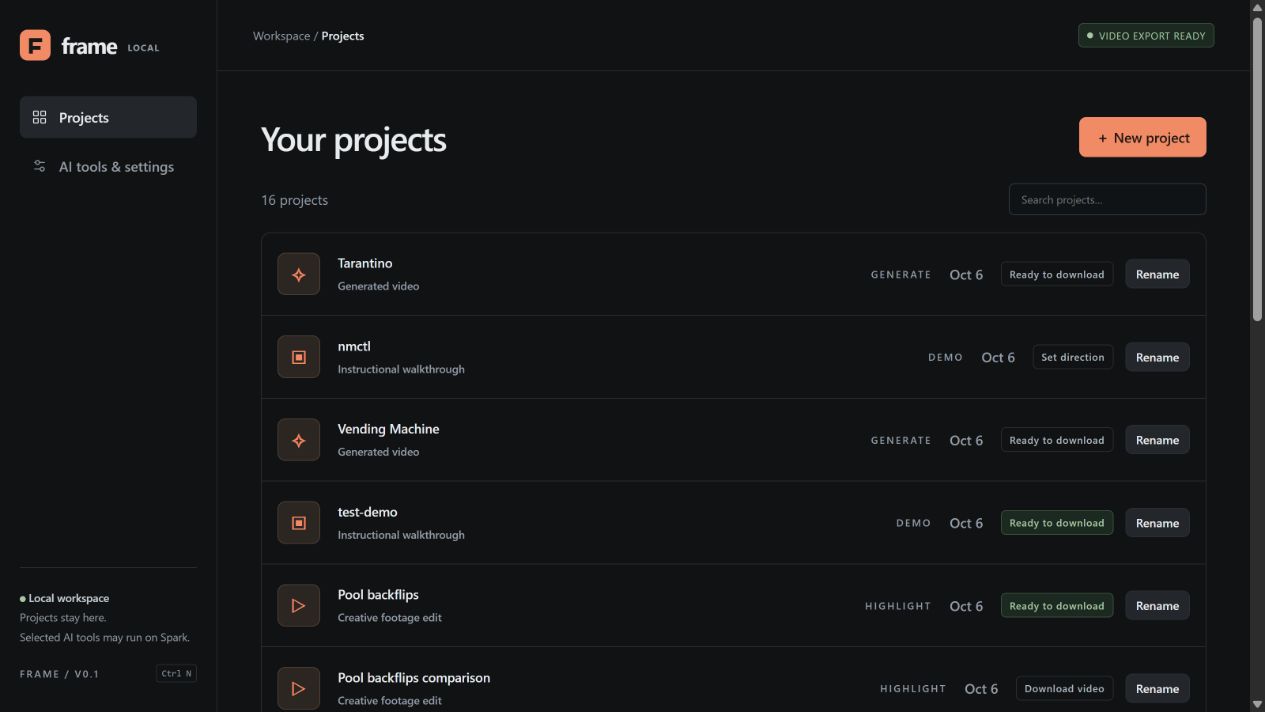
Frame — AI Video Generation & Editing
A local app for generating video, comparing versions and editing footage. Watch three generated-video examples on the project page.
View Details
MCP Server for Intercom
Independent open-source tool. A TypeScript MCP server that gives AI assistants reusable search tools for Intercom conversations and tickets, with customer, date and status filters.
View Details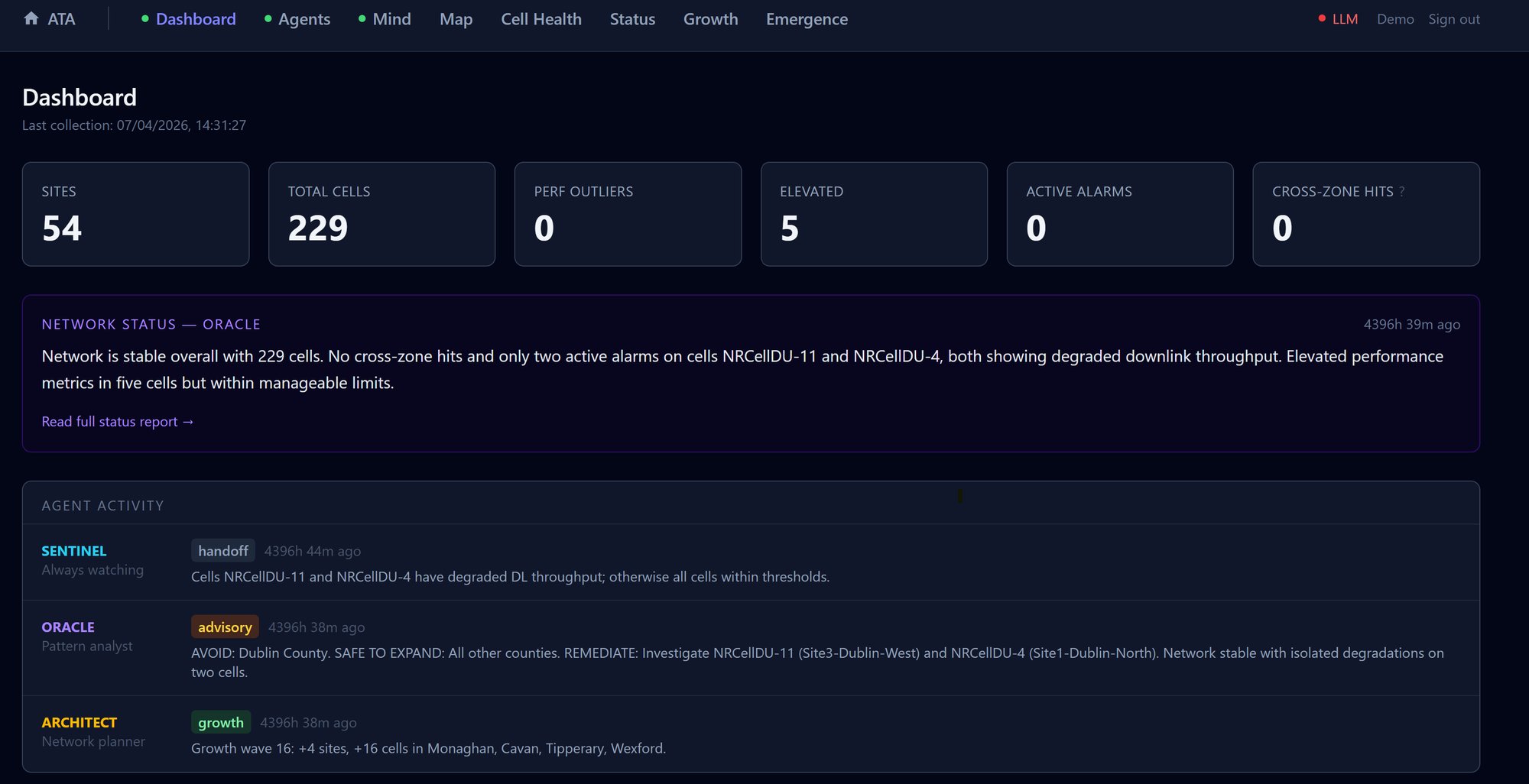
Autonomous Network Agents
Independent research prototype. Three scheduled AI agents monitor, analyse and expand a simulated Irish 5G network inside a locked-down sandbox. They coordinate through a shared bulletin board and can wake each other when a fault needs attention.
View DetailsAreas of expertise
Engineering interests and experience, demonstrated through working projects.
AI workflow & tool integration
Connect an assistant to the systems and records a workflow already depends on.
Engineering focus: A focused integration with explicit tools, permissions and failure handling.
See MCP Server for IntercomAgent & computer-use prototyping
Explore tasks that require observing an interface, acting and checking the result.
Engineering focus: A working proof of concept with action boundaries and recorded behaviour.
See Perceptron PhoneEvaluation & reliability
Separate a plausible response or completed tool call from a verified task outcome.
Engineering focus: An evaluation method and report covering representative tasks, failure cases and limits.
See Perceptron PhonePersistent agent context
Carry useful decisions across coding sessions while keeping scope and correction visible.
Engineering focus: An inspectable memory workflow and a plan for testing retrieval and stale information.
See Claude RecallOpen to collaboration
Alongside my independent projects, I am interested in working with businesses and technology partners to explore practical applications of AI.
Small and medium-sized businesses
I'm interested in exploring specific business problems, identifying suitable tools and, where appropriate, developing focused prototypes.
Technology partners
I'm open to collaborating with consultancies, software companies and technology providers that could benefit from specialist AI engineering expertise.
Engineering approach
Start with the problem, not the technology. Build only when there is a good reason.
Understand
Identify the problem, existing process and what a meaningful improvement would look like.
Explore
Assess existing tools, simpler alternatives and whether AI is appropriate.
Experiment
If justified, build or configure a focused solution with clear boundaries.
Evaluate
Test against representative tasks and understand the limitations.
Decide
Determine whether the results justify further development, adoption or no further action.
Engineering Principles
Manifesto for AI-Driven & AI-Assisted Development →
Principles for using AI in software development, including where automation helps and where human judgement matters.
Get in touch
Have a business problem, technical challenge or idea for collaboration? No detailed project specification is needed.
Start a conversation